

Hinged vs Sliding Shower Screens: Which Door Type Suits Your Bathroom?

Please note: The images displayed in this blog post are for illustrative purposes only and do not reflect the REGAL Shower Screens range. Please visit the Product pages of our website for a true representation of our products.
One of the questions I get most often from customers planning a bathroom renovation is also one of the most overlooked: how do you want your shower door to actually open?
Most people spend a lot of time deciding whether to go frameless, semi-frameless, or framed. Fewer stop to think about the door mechanism itself. But the choice between a hinged vs sliding shower screen can matter more to how the bathroom works day to day than almost any other decision you make.
I want to clear something up before we go any further. If you have come across the term “pivot shower screen” and wondered where that fits, you are not alone. Pivot, hinged and sliding are three distinct mechanisms, not two names for the same thing, and I will explain exactly what sets them apart.
In this article, I will walk you through how hinged and sliding screens each work, who each one suits, and the honest trade-offs between them. By the end, you will have a clear picture of which door type fits your bathroom layout.
Hinged, Sliding and Pivot: What Each One Actually Means
There are three main shower door types in Australia, and it is worth understanding them before you start comparing anything else. The door mechanism determines how your shower opens and closes. It affects your bathroom layout, your cleaning routine, and how much floor space you need in front of the shower.
A hinged shower screen works like a standard door. It swings open on hinges that are fixed to the wall or to an adjacent glass panel. The door can open inward or outward, and left or right, depending on your bathroom layout.
A sliding shower screen works differently. The door panel moves horizontally along a track, sliding across rather than swinging out. There is no swing arc. The door remains within the screen’s footprint at all times.
A pivot shower screen is a third mechanism, and it is not the same as a hinged door, though the two often get confused. A pivot door rotates on a top-and-bottom pivot point rather than on wall-mounted hinges. At REGAL, pivot screens sit in our semi-frameless range. They are a distinct product with a different mechanism. If pivot shower screens are on your shortlist, I’d recommend reading our dedicated post for the full picture.
This article focuses on the comparison that comes up most often in consultation: hinged versus sliding.
Hinged Shower Screens: How They Work and When They Make Sense
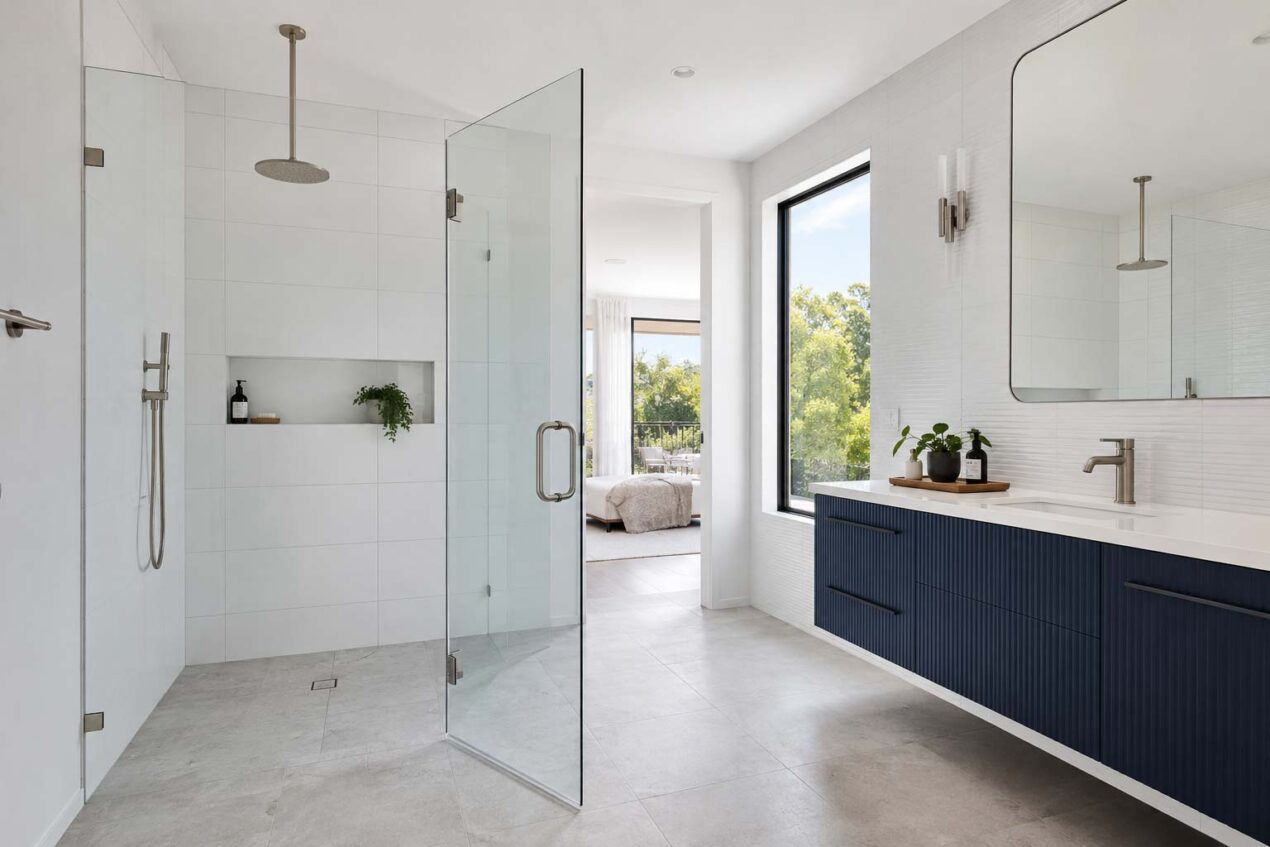
A hinged shower screen operates the same way as a standard door. The glass panel is mounted on hinges fixed to the wall or to an adjacent fixed glass panel, and the door swings open from there. At REGAL, all hinged shower screens are frameless. There is no surrounding frame. The hinges and brackets carry the door, and the glass does the rest.
The direction the door swings is fully customisable. It can open inward or outward, and left or right, depending on your bathroom layout.
The Case for a Hinged Shower Screen
The biggest practical advantage of a hinged screen is the opening. When the door is fully open, you have the entire door width as your entry point. Nothing stacks, nothing slides partway. The full opening is available. For most people, this makes getting in and out of the shower easier, and for anyone who needs a wider entry for accessibility reasons, it is worth factoring in.
There is also no track on the floor. The door swings clear, which means no channel collecting water and soap scum at the base. I find that customers with hinged screens spend a lot less time thinking about track maintenance than those with sliding screens.
From a design standpoint, the frameless aesthetic is clean. The hardware is minimal, with 12 bracket finish options including Black, Brushed Gold, Rose Gold and Brushed Nickel, so there is enough range to suit most bathroom styles.
Our frameless shower screens use 10mm toughened glass, come in 7 configurations, and are custom-made to measure. They carry a 2-year product warranty, with 12 months on moving parts, including hinges.
Where Hinged Screens Have Limitations
The main consideration with a hinged shower screen is door clearance. The door needs space to swing open in the direction it travels, and in a tight ensuite, that swing arc can conflict with the vanity, the toilet, or the bathroom entry door.
If the space in front of the shower is limited, a door that opens inward is an option. But an inward-opening door requires clearance within the shower recess, which can also be limited by the configuration.
These are layout questions, not reasons to rule out a hinged screen. The disadvantages of hinged shower doors are manageable in most bathrooms. The key is knowing the clearance before anything is ordered. Our team assesses this at the free measure visit, before any product is manufactured, which takes the guesswork out of the decision entirely.
Sliding Shower Screens: How They Work and When They Make Sense
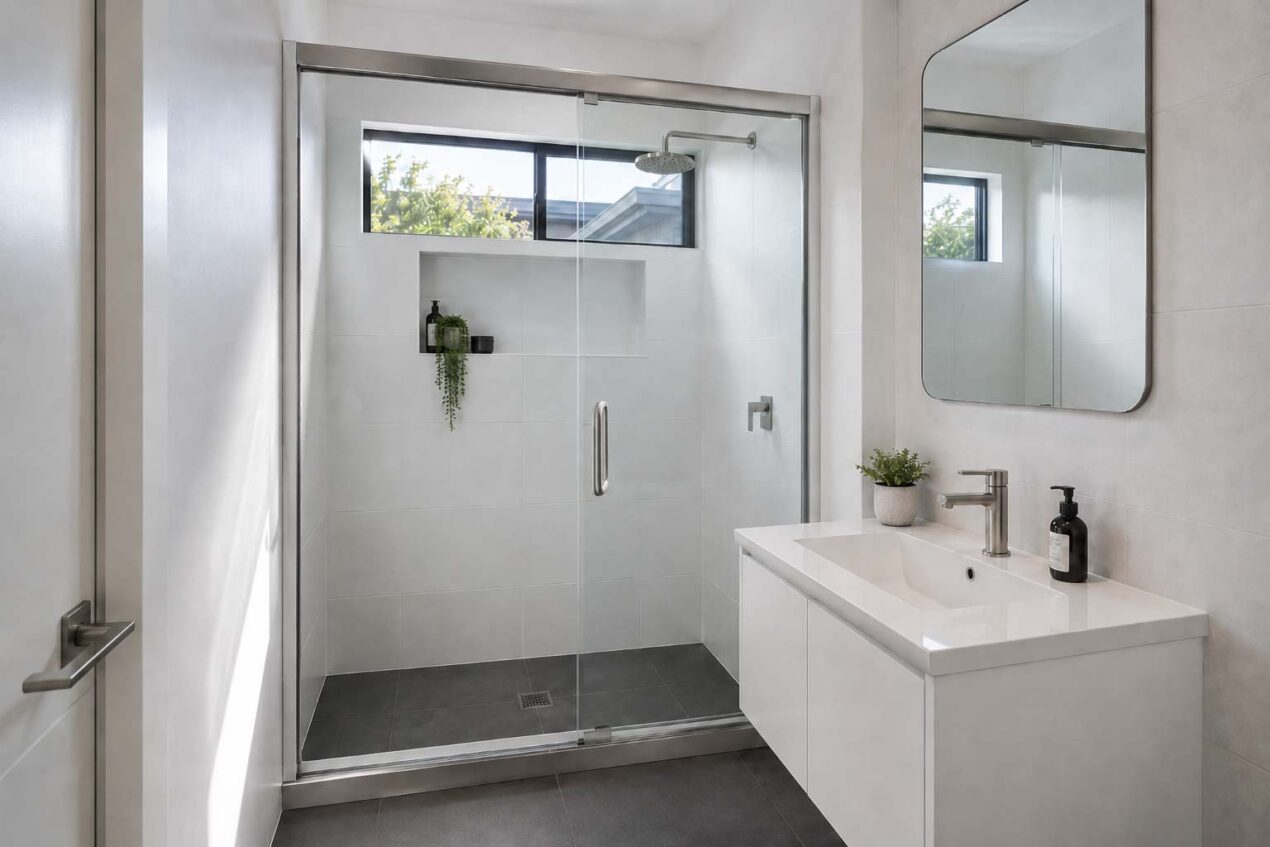
A sliding shower screen moves horizontally along a track rather than swinging open. The door panel slides across and stays entirely within the footprint of the screen. There is no swing arc and no clearance requirement in front of the shower.
At REGAL, sliding shower screens are semi-frameless. The glass panels sit within a framed channel, and the door runs on dual roller carriages with stainless steel bearings. Full-length magnetic seals run along the door edges to keep water where it belongs.
In my experience, sliding screens are the first recommendation I make when a customer has a smaller ensuite or an alcove shower with limited floor space in front of the entry. There simply is not room for a door to swing, and a sliding screen solves that cleanly.
The Case for a Sliding Shower Screen
The main advantage is that the door never needs space outside the shower to operate. That makes sliding screens well-suited to tight bathroom layouts, alcove shower configurations, and corner shower setups where a swinging door would create problems.
Our semi-frameless sliding shower screens come in 6 configurations, including Corner Slider and Wall to Wall, with 6mm toughened glass and 10 frame colour options. The quick-release rollers make maintenance easier than older track systems, and the full-length magnetic seals provide solid water containment. The seal runs the full height of the door, not just at the base. They carry a 2-year product warranty, with 12 months on moving parts including rollers.
Where Sliding Screens Have Limitations
The main trade-off is entry width. Because one panel slides behind the other, the usable opening is roughly half the total screen width. For most people this is not a problem in day-to-day use, but it is worth knowing upfront, particularly for anyone who needs a wider entry point.
The other consideration is the floor track. The channel at the base of the screen collects water, soap scum, and general bathroom grime over time. In Queensland’s coastal humidity, that build-up can happen faster than you’d expect. The quick-release rollers on our screens make it easier to clean the track thoroughly, but the maintenance is ongoing. The disadvantages of sliding shower doors come down to these two things: a narrower opening and a track that needs regular attention. Neither is a dealbreaker, but both are worth factoring into the decision.
Hinged vs Sliding Shower Screens: A Side-by-Side Comparison
Neither option is objectively better than the other. The right choice comes down to your bathroom layout and what you are prioritising: entry width, space saving, maintenance, or aesthetics. This table puts the key differences in one place.
| Factor | Hinged Screen | Sliding Screen |
| Door mechanism | Swings open on hinges | Slides horizontally on a track |
| Space required | Needs floor clearance in the swing direction | No swing clearance needed |
| Entry width | Full door width when open | Approximately half the screen width |
| Best bathroom type | Larger bathrooms, master ensuites, walk-in showers | Smaller ensuites, alcove showers, tight layouts |
| Water containment | Strong, solid seal when closed | Strong, full-length magnetic seals at REGAL |
| Maintenance | Hinges require occasional check; no floor track | Track and rollers need regular cleaning |
| Glass (REGAL) | 10mm toughened glass (frameless) | 6mm toughened glass (semi-frameless) |
| Frame (REGAL) | Frameless, bracket and hinge hardware only | Semi-frameless, channel frame with rollers |
| Finish options (REGAL) | 12 bracket and hinge finishes | 10 frame colours |
| Warranty (REGAL) | 2 years (12 months on hinges) | 2 years (12 months on rollers) |
If you are reading across that table and one column already looks more like your bathroom than the other, that is usually a reliable signal. Most people find the decision becomes clearer once the trade-offs are laid out this way rather than described separately.
Which Door Type Suits Your Bathroom?
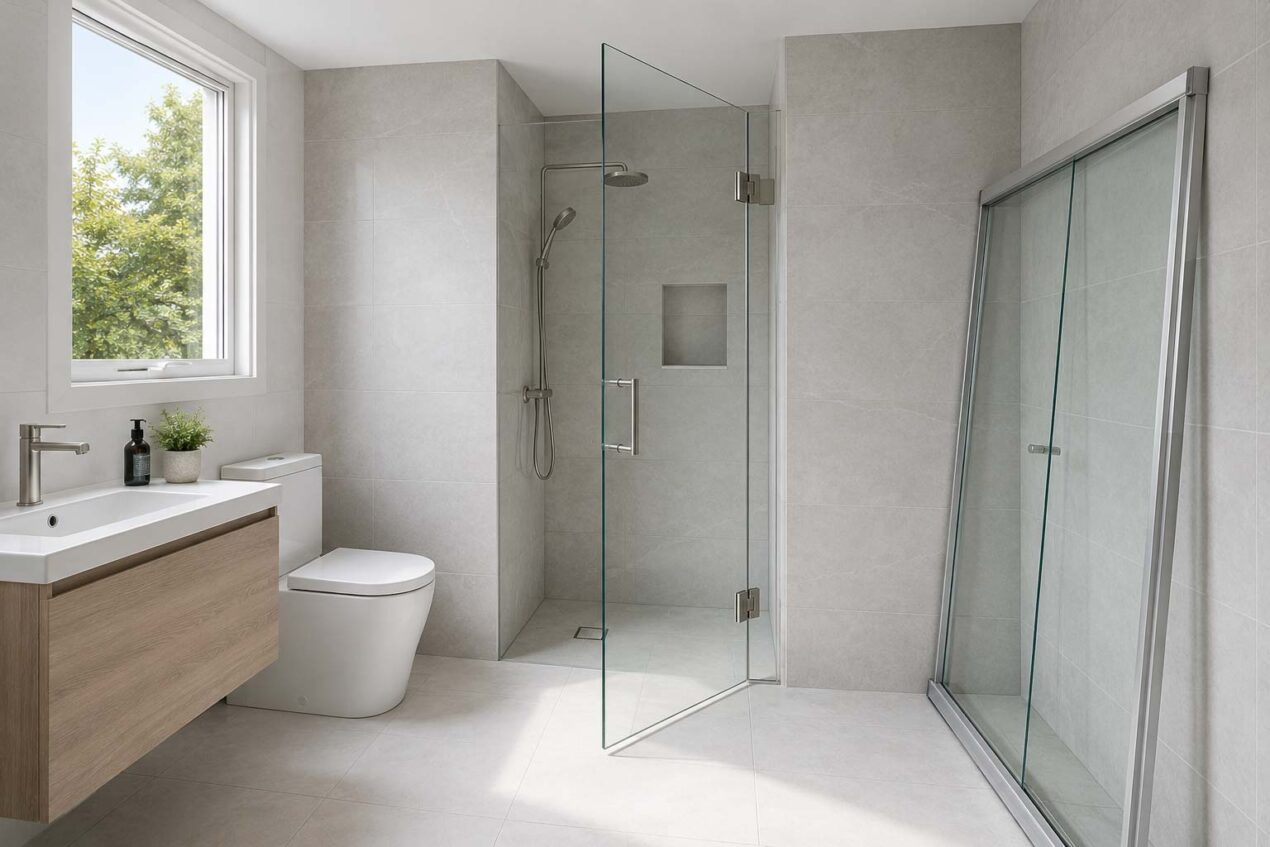
Based on what we see across Gold Coast and Brisbane bathrooms, most people land in one of three situations. Here is a direct recommendation for each.
Small ensuite or alcove shower. Go with a sliding screen. If the floor space in front of the shower entry is limited, which it often is in the ensuites of newer Queensland builds and apartments, there is simply no room for a door to swing. A sliding screen keeps the door within its own footprint and solves the clearance problem entirely.
Larger main bathroom, walk-in shower, or master ensuite with good floor space. A hinged frameless screen is worth considering seriously. The wider opening is easier to live with day to day, there is no floor track to maintain, and the frameless aesthetic tends to suit larger bathroom layouts well. Customers in this situation who choose hinged screens rarely wish they had gone the other way.
Unsure, or the layout is complicated. This is where a free on-site measure makes the most sense before any decision is locked in. I have seen bathrooms that looked like clear sliding candidates on paper turn out to have enough clearance for a hinged door once we were actually on site, and the reverse just as often. The most common regret I hear from customers who ended up with the wrong mechanism is not about its appearance. It is about opening the door and finding that it blocks the vanity or catches on something every single time. Booking a free measure-and-quote removes that risk. Our team assesses the exact layout, clearance and configuration before anything is ordered, and we can walk you through our range of shower screens on the Gold Coast to find the best fit for your space.
What REGAL Offers in Each Category
If you have worked out which mechanism suits your bathroom, here is what we actually make and install in both categories.
For hinged screens, our frameless shower screens use 10mm toughened glass and come in 7 configurations, including Front Only, Front and Return, Wall to Wall, and Corner Angled. There are 12 bracket and hinge finish options, including Black, Brushed Gold, Gunmetal, Rose Gold and Brushed Nickel. Everything is custom-made to measure. The product carries a 2-year warranty, with 12 months on moving parts including hinges.
For sliding screens, our semi-frameless sliding shower screens use 6mm toughened glass and are available in 6 configurations to suit different bathroom layouts. There are 10 frame colour options, full-length magnetic seals, and quick-release rollers on dual stainless steel bearing carriages. Also custom-made to measure. The same 2-year product warranty applies, with 12 months on moving parts including rollers.
Both product ranges comply with Australian Standards AS2208 and AS1288 for glass safety and installation. Our team measures, manufactures and installs everything. No subcontracting.
The process is the same for both: we come to you for a free on-site measure and provide a same-day fixed quote. No guesswork, no back-and-forth on pricing.
Frequently Asked Questions
Are Sliding or Hinged Shower Doors Better?
Neither is objectively better. The right choice depends on your bathroom layout and what you are prioritising. Sliding screens suit smaller ensuites and tight alcove showers where there is no room for a door to swing. Hinged screens suit larger bathrooms where a wide, unobstructed entry is the priority. If you are not sure which applies to your space, a free on-site measure is the most reliable way to find out before anything is ordered.
What Are the Disadvantages of Sliding Shower Doors?
The two main trade-offs with sliding shower screens are a narrower entry width and a floor track that needs regular cleaning. Because one panel slides behind the other, the usable opening is roughly half the total screen width. The floor track also collects moisture, soap scum and grime over time, particularly in Queensland’s coastal humidity, and needs consistent attention to keep the rollers running smoothly.
What Are the Disadvantages of Hinged Shower Doors?
The main consideration with hinged shower screens is door clearance. The door needs space to swing open in front of the shower, and in a small ensuite or tight layout, that swing arc can conflict with the vanity, toilet or bathroom entry door. It is not a reason to rule out a hinged screen, but measuring the clearance before choosing is essential. REGAL’s team assesses this at the free measure visit before any product is manufactured.
Do Hinged Shower Doors Leak?
A well-installed hinged shower screen seals properly and does not leak under normal use. Hinged screens rely on a quality seal at the door edge and accurate installation. When both are right, water stays where it should. Our frameless hinged shower screens are custom-measured and installed by our own team, which is the most important factor in preventing leaks over the screen’s lifespan.
Choosing the Right Shower Screen Door for Your Bathroom
The core principle running through this article is straightforward: the door mechanism that suits your bathroom comes down to layout, not aesthetics. Sliding screens work best in smaller ensuites and alcove showers where swing clearance is limited. Hinged frameless screens are the stronger choice when the bathroom has enough floor space and a wider, unobstructed entry matters.
If you have been weighing up pivot screens as well, our dedicated post on pivot shower screens covers that mechanism in full.
For most people, the clearest next step is a free on-site measure. We come to you, assess the exact space, and provide a same-day fixed quote. There is no guesswork about clearance, no estimating from photos, and no ambiguity on price. Our team handles everything from measure through to installation. No subcontractors. To see the full range and get the process started, visit our shower screens on the Gold Coast page.
Request a Free Quote Today!
Experience the REGAL difference today by completing the free quote request form below. Your dream space awaits.


