
Mirror Splashbacks: Pros, Cons and Whether They’re Right for Your Kitchen

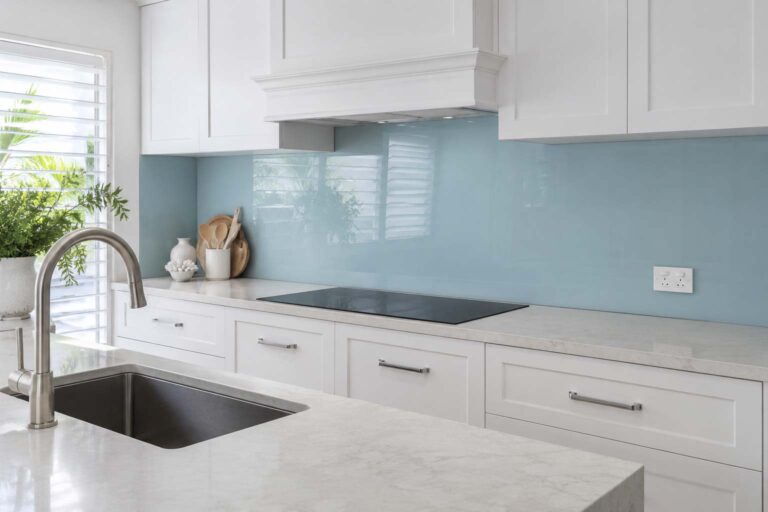
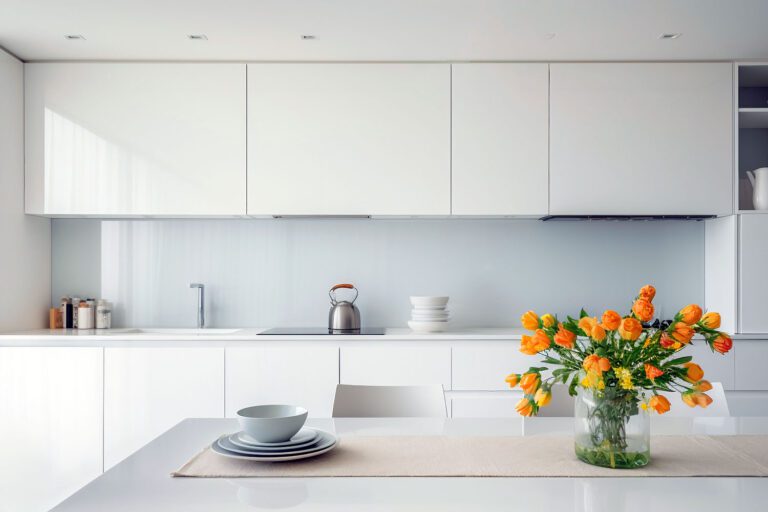
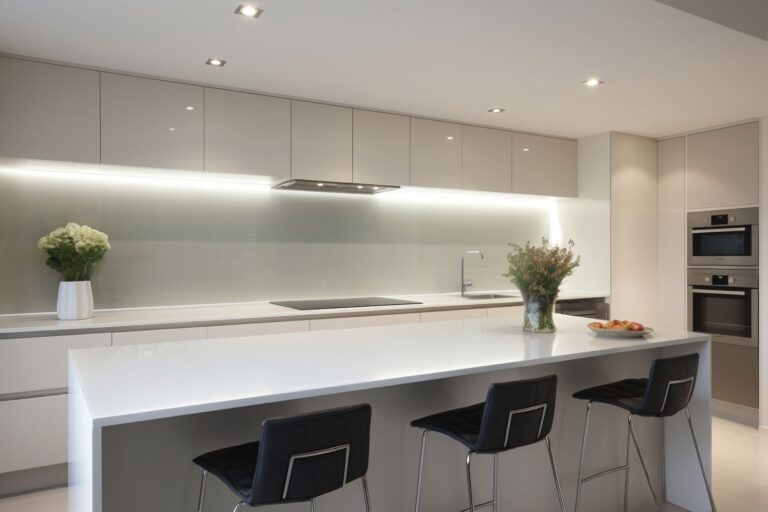
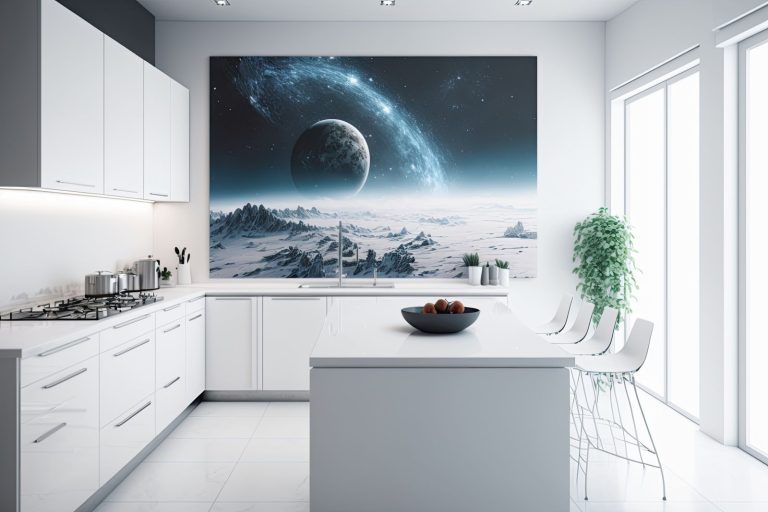
Please note: The images displayed in this blog post are for illustrative purposes only and do not reflect the REGAL Shower Screens range. Please visit the Product pages of our website for a true representation of our products.
A few weeks ago a customer stood in front of a mirror splashback sample in our showroom, looked at her own reflection in it, and said the thing almost everyone says: “won’t it just show every single smudge?” It’s a fair question. It’s also the wrong question to lead with. Mirror splashback pros and cons go a lot deeper than smudges, and most articles you’ll find online either gloss over the trade-offs or read like a brochure.
I wanted to do this one properly. After decades of experience in the glass industry across the Gold Coast and Brisbane, I’ve watched mirror splashbacks earn their place in some kitchens and quietly disappoint in others. The product itself is excellent: toughened safety glass, custom-cut, genuinely transformative in the right room. But it isn’t the right call for every kitchen, and pretending otherwise doesn’t help you.
So this is the honest weigh-up. What mirror splashbacks do brilliantly. What they don’t. The questions worth asking before you commit. And a clear framework for working out whether one belongs on your wall.
What Is a Mirror Splashback?
A mirror splashback is a single panel of toughened safety glass with a mirror finish, custom-cut and installed behind a cooktop, behind a sink, or run across a feature wall. It’s the same category of glass we use in shower screens. It’s designed for the application, not a household mirror retrofitted to do a job it wasn’t built for.
Customers sometimes come into the showroom picturing the kind of mirror you’d hang above a hallway console, and I have to walk them through what an actual splashback panel looks like. Different product entirely. Mirror splashbacks are typically 4–6mm toughened safety glass, polished on the edges, fixed flush to the wall and built to handle a working kitchen.
We can supply mirror splashbacks up to 2,400mm wide as a single piece, with larger spans segmented for the cleanest result. The glass is cut, processed and toughened at our Brisbane Glass Plant, not imported pre-cut, which means the panel arrives sized exactly to your wall, not trimmed to fit on the day.
Mirror kitchen splashbacks come in two broad forms: plain mirror, and tinted MirrorKote finishes (Super Silver, Smoky, Bronze). I’ll cover the tinted mirror options properly further down.
Mirror Splashback Pros and Cons at a Glance
Before getting into the detail, here’s the short version.
Pros
- Makes a kitchen feel larger and brighter by bouncing light around the room.
- A single-piece finish with no grout lines or panel joins to clean.
- Easier to wipe clean than tile. One flat surface, no edges to chase.
- Toughened safety glass built for kitchen conditions, not a household mirror.
- Customisable with tinted MirrorKote finishes for a softer reflection.
Cons
- Shows fingerprints, smears and grease more visibly than matte finishes.
- Reflects everything on the bench, so clutter and mess appear doubled.
- Typically priced at the higher end of the splashback range.
- Full mirror reflection is a strong style choice and isn’t to every taste.
- Constant reflection can feel busy in a small or already-busy kitchen.
The rest of this article walks through each of these mirror splashback pros and cons in detail, with the trade-offs worked out properly.
The Real Advantages of Mirror Splashbacks
The advantages of mirror splashbacks fall into three honest categories: what they do for the room, what they do for daily life, and what the product itself brings to a kitchen build. Each one is real. But each one has a limit, and pretending otherwise sets the wrong expectation.
They Make a Kitchen Feel Larger and Brighter
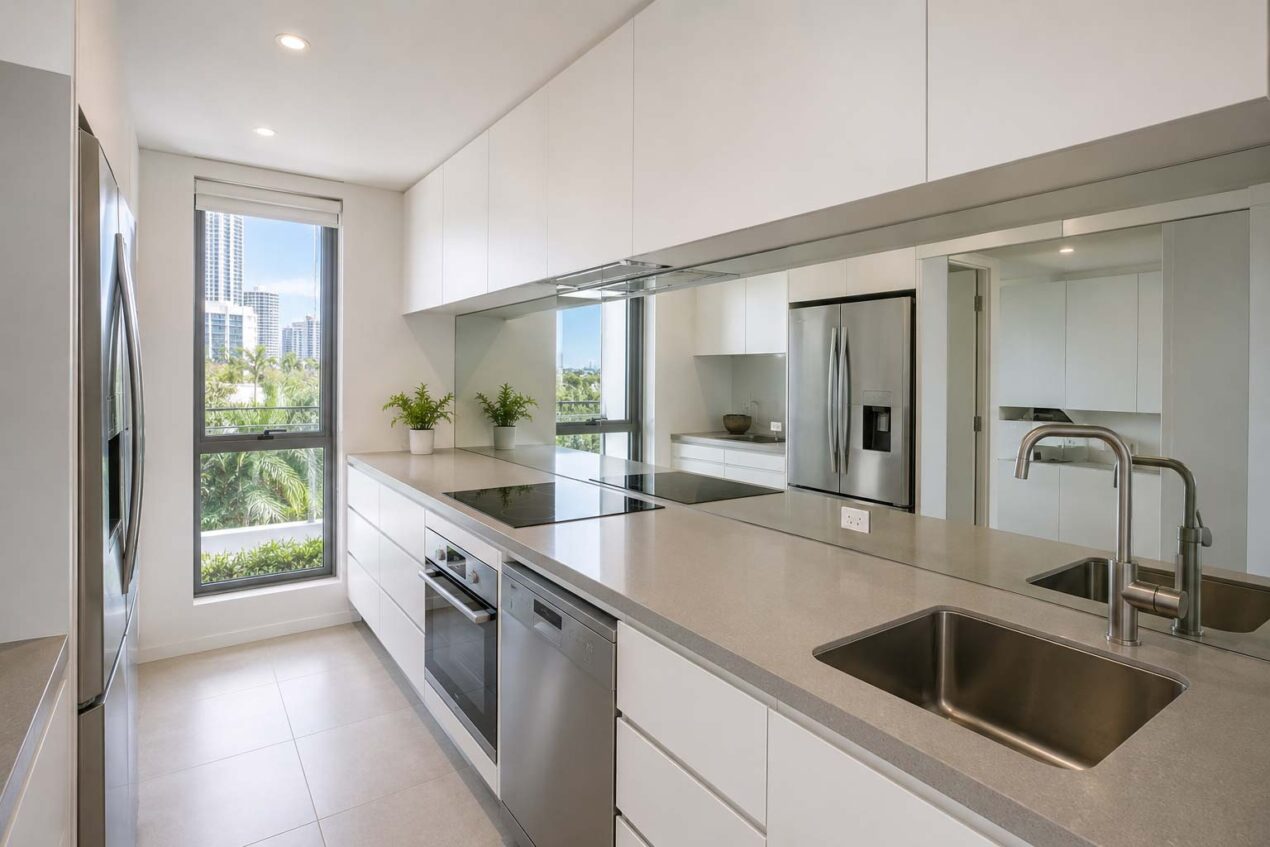
This is the strongest practical reason to choose mirror, and it’s the one I see proved out most often on site. Light reflection off a full mirror panel changes how a room reads, particularly in small kitchens, galley kitchens, and south-facing rooms where natural light is limited. I’ve watched a small Gold Coast galley transform once we put mirror behind the cooktop. The afternoon light bounced off the panel and the whole room lifted. The owners said it was the single change that made the renovation feel like the right decision.
That said, mirror splashback advantages have limits. A mirror won’t fix a fundamentally dark kitchen on its own. If the room has poor lighting, dark benchtops and dark cabinetry, mirror will reflect the dark. It won’t magic up brightness. Pair it with good downlights, lighter benchtop tones and a considered cabinetry palette, and the effect is genuinely transformative. Skip those, and you’re underusing the panel.
A Single-Piece Finish With No Grout Lines
Tile splashbacks look beautiful in the right kitchen, but grout cleaning is the daily reality: small lines that catch grease and discolour over time. A mirror splashback skips all of it. One panel of toughened safety glass, edge to edge, no joins to scrub.
We can run a single piece up to 2,400mm wide. Wider spans are segmented at clean panel joins. That’s honest engineering for the spread, not a compromise. Either way, you’re cleaning a flat surface with a microfibre, not chasing grout with a scrubbing brush.
Custom-Made to Your Kitchen, Not the Other Way Around
Every mirror splashback we supply is custom-cut to your wall, not a standard sheet trimmed to fit on the day. Our process starts with a free on-site measure, where we work out the exact dimensions, cut-outs for power points, the line up to your rangehood and the meeting points with cabinetry. From there, the panel is fabricated at our Nerang factory, then installed by our own team.
It’s a supply-and-install service. We don’t sell the panel separately for self-install. Too much can go wrong with a heavy toughened glass panel on the wall. The on-site measure is what gives the same-day fixed quote its accuracy.
The Honest Disadvantages of Mirror Splashbacks
The disadvantages of mirror splashbacks are the part of the conversation that earns this product its right place, or rules it out for your kitchen. Four come up repeatedly, and they’re worth taking seriously before you commit. None of them are deal-breakers in the right context. All of them deserve a straight answer.
They Show Smudges, Smears and Fingerprints Clearly
Mirror is unforgiving. Fingerprints, oil splatter, water marks: anything that lands on a reflective surface shows clearly in a way it doesn’t on matte tile or back-painted coloured glass. It’s the single most common piece of feedback I get from customers six months into living with one.
A customer rang me earlier this year. She’d put plain mirror behind her cooktop and across her sink wall, and was calling to share what she’d learnt. She loved it. The light, the space, the way it had opened the room up. Every reason she’d chosen it had paid off. But she’d settled into a daily wipe with a microfibre cloth and a proper glass clean once a week. “Worth it,” she told me, “but you have to actually do it.” That’s the honest version. The wipe itself is quick. No grout to chase, no edges to fuss over. But it is needed.
Reflection Doubles Whatever’s on Your Bench
This is the under-discussed disadvantage that comes up constantly in Australian renovation forums and rarely on supplier sites. Anything on the benchtop, whether it’s a kettle, a bottle of olive oil, a stack of mail or the toaster, is reflected back. Visual clutter is doubled. A busy bench reads as a very busy bench.
If your bench tells the truth about your week, mirror will tell it back to you. That’s not a flaw in the product. It’s a lifestyle fit question. Mirror works best in kitchens where the bench is regularly clear, or where the homeowner enjoys styling a kitchen as part of how they live. In households where the bench is genuinely the working surface and stays full, the reflection can feel busy rather than spacious.
They Sit at the Higher End of the Splashback Price Range
Mirror is one of the more premium splashback options. Toughening, polishing the edges, and the size of a typical kitchen panel all add up. It’s not the cheapest finish on the market, and there’s no honest way to dress that up.
For indicative pricing context, based on a 1000mm × 2000mm panel: back-painted coloured glass starts from around $1,200, and tinted mirror from around $1,400. Plain mirror typically sits at the higher end of that range. All pricing here is indicative and depends on size, finish and access. That’s what the free on-site measure is for. The same-day fixed quote means whatever number you get on the day is the number, not an estimate that drifts.
For a fuller breakdown, our guide to glass splashbacks cost walks through the full price range and what drives it.
What About Heat Behind a Cooktop?
This is the question I get asked most often, and it’s worth answering directly before we get into the genuine trade-offs.
Mirror splashbacks at REGAL are toughened safety glass made to Australian Standards AS2208 and AS1288, meaning they’re suitable as a kitchen splashback when installed to those standards, including behind cooktops. That’s not marketing language; it’s the compliance the panel is manufactured to. Toughened safety glass is treated to handle the temperatures generated by gas and electric cooktops in normal kitchen use without cracking, warping or shattering.
The question that actually matters on the day is the clearance between the glass and the heat source, and that depends on your cooktop. A gas cooktop with open flames is a different proposition to an induction cooktop sitting flush against the bench. Each appliance comes with its own installation requirements, and those requirements drive the answer for your kitchen specifically.
This is why the free on-site measure exists. Our team checks the cooktop type, position, rangehood arrangement, and wall before any quote is written. We don’t supply panels for self-install. Too much depends on the heat-clearance call being made by someone who’s looked at the actual kitchen.
Tinted Mirror as a Softer Alternative
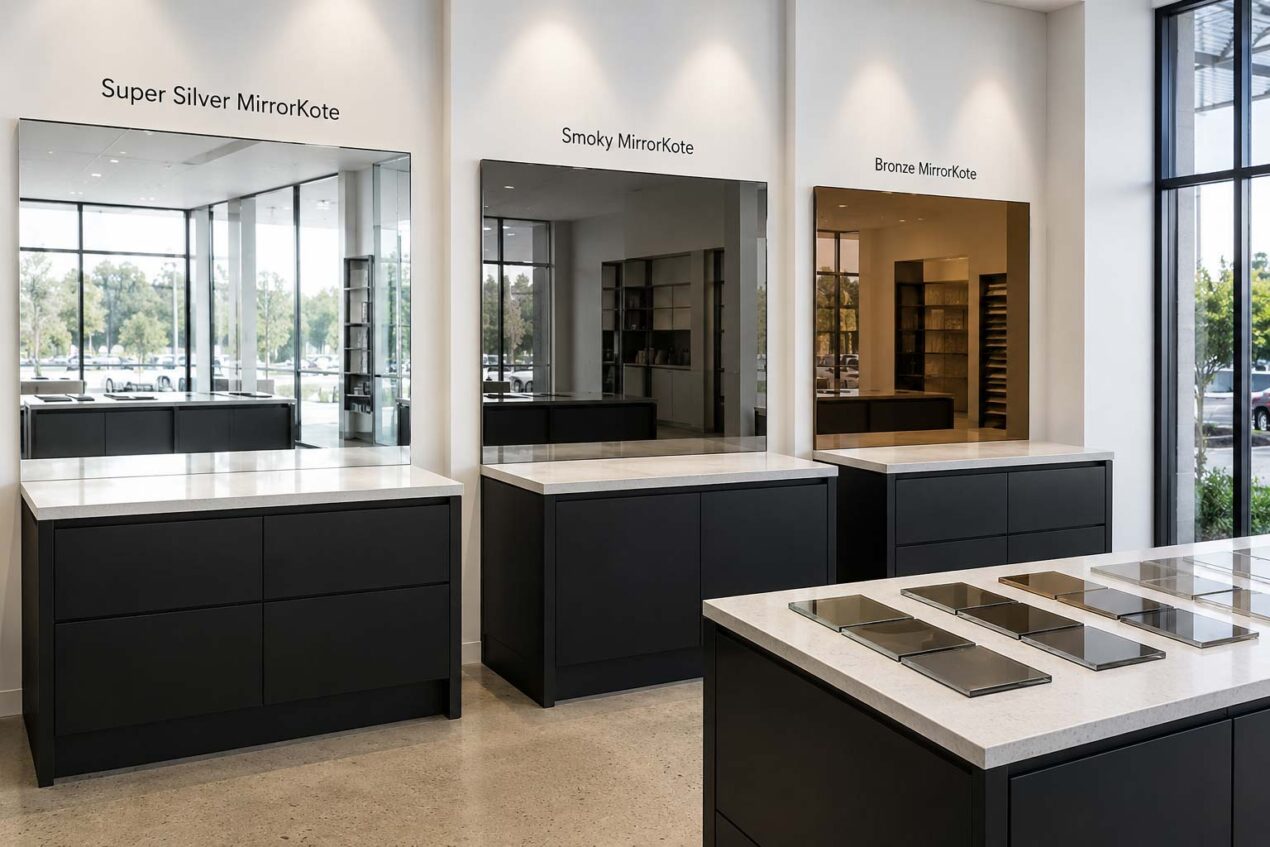
If plain mirror feels like too much for your kitchen but you don’t want to give up on the concept entirely, tinted mirror is usually the answer. Tinted comes up most when a customer loves the idea of mirror but worries the kitchen will feel too clinical or too bright, and the conversation shifts the moment they see the samples side by side.
Our MirrorKote range covers three finishes. Super Silver is the most subtle: closest to plain mirror, but with a softer tonal shift that takes the clinical edge off. Smoky is a warm grey, contemporary and easier on the eye in busy kitchens. Bronze is warmer again, more amber-toned, and pairs particularly well with timber cabinetry and stone benchtops. All three reflect the room with a colour layer rather than a hard silver bounce, which softens the brightness, calms the doubled-clutter effect slightly, and reads less “full mirror” in the room.
I’d put tinted mirror splashback ideas at the top of the list for any kitchen where plain mirror feels close but not quite right. Read our post on grey mirror splashbacks to learn more about this option. If you’re leaning toward tinted, our mirror splashback range covers the full set of options.
Mirror vs Other Splashback Options
If you’re weighing mirror splashback alternatives, the realistic comparison set is three other finishes: back-painted coloured glass, printed glass, and tile. Each suits a different kitchen profile.
| Splashback Type | Look | Maintenance | Cost Positioning | Best For |
| Mirror Splashback | Reflective, expansive, contemporary | Daily wipe-down required | Higher end | Small or low-light kitchens; owners comfortable with regular cleaning |
| Back-Painted Coloured Glass | Clean colour panel, no joins | Low: wipes easily, hides smudging | Mid: most affordable glass option | Most kitchens; budget-conscious renovations; bold or subtle colour choices |
| Printed Glass | Custom image or pattern under glass | Low: same as back-painted | Higher than back-painted | Statement kitchens; clients wanting a feature splashback |
| Tile | Patterned, textured, traditional | Higher: grout cleaning required | Wide range: entry-level to premium | Period-style kitchens; renovations where grout maintenance isn’t an issue |
The mirror vs glass splashback question usually comes down to two things: how much light you want bounced around the room, and how much daily upkeep you’re prepared to do. Mirror beats the alternatives in small kitchens, in galley layouts, in south-facing rooms with limited natural light, and in homes where the owner enjoys keeping the kitchen styled and clear. In those settings, nothing else does what mirror does.
An alternative beats mirror in heavy daily-use kitchens, in busy households where the bench rarely clears, and in renovations where the budget is tighter. Back-painted coloured glass splashbacks are the more affordable starting point: same single-piece glass finish, lower maintenance burden, far broader colour range. Tile suits buyers who want texture and pattern, and aren’t fazed by grout. Printed glass is the answer when the splashback itself is meant to be the feature.
Who a Mirror Splashback Suits (And Who It Doesn’t)
After all of that, the question is whether a mirror splashback kitchen is the right call for your home. Here’s the straight framework I use when customers ask in the showroom.
Who It Suits
- Owners of small or low-light kitchens, including galley layouts and south-facing rooms.
- People who keep a clean bench and don’t mind a quick daily wipe.
- Renovators after a contemporary look that won’t cost more than premium tile.
- Buyers who want a single-piece finish with no grout to maintain.
- Households where an induction cooktop is in play, or a gas cooktop with sensible clearances.
If that’s you, mirror does something no other splashback finish does. It’s worth the upkeep.
Who It Doesn’t Suit
- Households where the bench stays loaded with daily life: appliances out, mail piled up, kids’ bits everywhere.
- People who’ll be genuinely bothered by seeing fingerprints (be honest with yourself on this one).
- Kitchens with very high-flame gas cooktops where alternative materials may be more practical. That’s a call for the on-site measure.
- Buyers on the tightest budget. Back-painted coloured glass starts more affordably and looks excellent in its own right.
If that’s you, the answer isn’t no splashback. It’s a different one. Look at back-painted coloured glass first. It’ll suit you better.
If you’re in the first list, get an on-site measure booked. If you’re in the second, the alternative is a better fit, and you’ll thank yourself for it later.
Frequently Asked Questions
Are Mirror Splashbacks a Good Idea?
Mirror splashbacks are a good idea for small or low-light kitchens where bouncing light around the room makes a real difference, and where the owner is comfortable with a quick daily wipe. They sit at the higher end of the splashback price range, and they reflect whatever’s on the bench, so a clean kitchen reads even cleaner and a busy kitchen reads even busier. The strongest fit: clean-bench renovators after a contemporary, grout-free finish.
Are Mirror Splashbacks Expensive?
Mirror splashbacks sit at the higher end of the splashback price range, typically more expensive than back-painted coloured glass and comparable to or above premium tile. Indicative pricing: based on a 1000mm × 2000mm panel, back-painted coloured glass starts from around $1,200 and tinted mirror from around $1,400. Plain mirror splashbacks generally sit above tinted options. Final cost depends on size, finish and access. That’s resolved on the free on-site measure, with a same-day fixed quote you can plan against.
What Is a Cheaper Alternative to Mirror Splashbacks?
Back-painted coloured glass is the most common, cheaper alternative to a mirror splashback. It’s the same toughened safety glass, the same single-piece, edge-to-edge finish, the same easy-to-wipe-clean surface, just with a painted colour on the back instead of a mirror finish. The indicative starting price is around $1,200 based on a 1000 × 2000 panel, subject to an on-site measure. Printed glass is another alternative worth considering when you want a custom image or pattern. Browse our glass splashback range for the full set of options.
Are Mirror Splashbacks Hard to Keep Clean?
Mirror splashbacks aren’t hard to clean, but they do show smudges and fingerprints more visibly than matte finishes. The wipe itself is fast (no grout, no edges, just glass) but it needs to happen regularly. Most owners settle into a daily wipe with a microfibre cloth and a proper glass clean once a week. The honest take: easier than tile, less forgiving than back-painted matte glass.
Are Mirror Splashbacks Still in Fashion?
Mirror splashbacks are still in fashion, particularly tinted finishes like Smoky and Bronze, which sit comfortably alongside contemporary cabinetry and warmer kitchen palettes. A plain mirror splashback reads more striking and dramatic. It’s a stronger style statement, and either it works for the kitchen, or it doesn’t. The product itself isn’t going anywhere. The choice between plain and tinted is more about how loud you want the reflection to be in the room.
Final Thoughts on Mirror Splashbacks
The honest answer on mirror splashback pros and cons is that this product earns its place in the right kitchen and doesn’t earn it in the wrong one. Small or low-light kitchens, clean-bench owners, and renovators after a contemporary finish are the buyers who get the most out of it. The harsh-reflection trade-off is real, but a tinted mirror softens it for buyers who like the concept and want a calmer feel. Cost sits at the premium end of the splashback range. Heat behind a cooktop is resolved on the on-site measure, where both the standards and the appliance are factored in.
If your kitchen suits it and your lifestyle suits it, mirror is one of the most transformative splashback choices on the market. If they don’t, back-painted coloured glass is the better starting point, and the better long-term answer.
We’re a family business across the Gold Coast and Brisbane, with our glass cut, processed and toughened locally. Book a free on-site measure with our team, and we’ll provide a quote on the day. No waiting, no surprises. Visit our mirror splashback range to see the options first.
Request a Free Quote Today!
Experience the REGAL difference today by completing the free quote request form below. Your dream space awaits.