
Walk-In Wardrobe vs Built-In Wardrobe Costs: What’s the Real Difference?

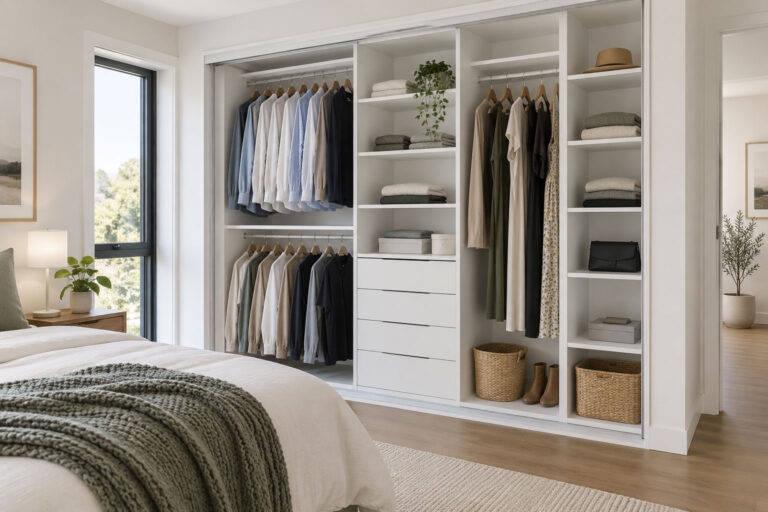
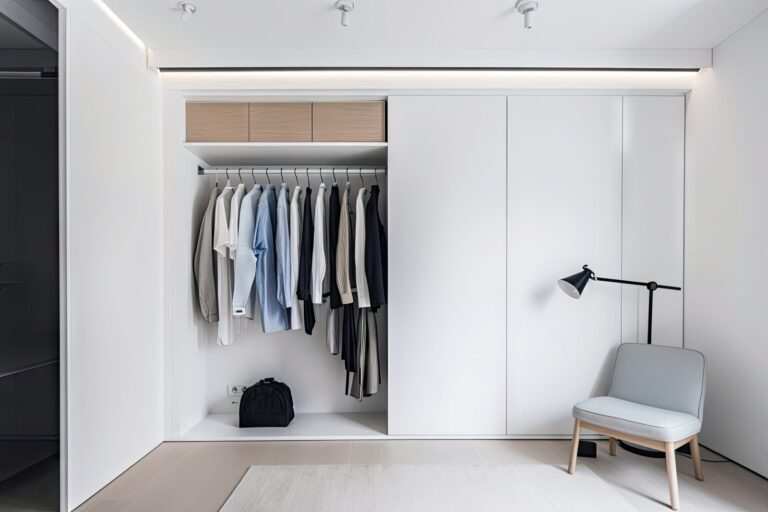
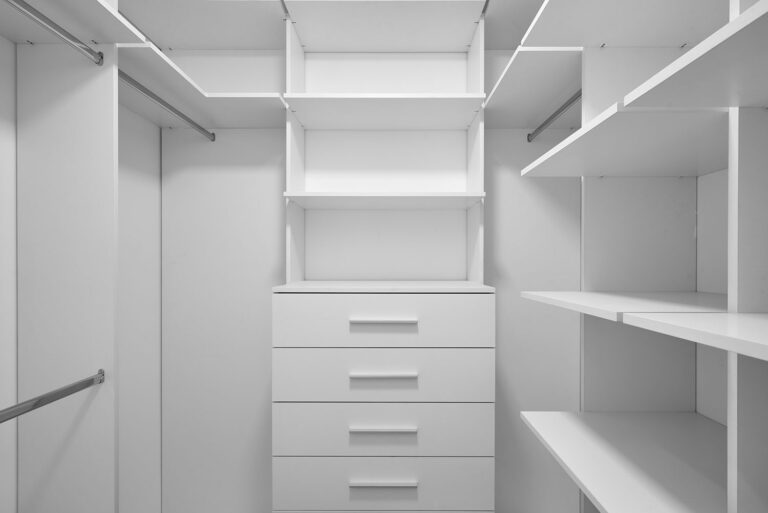
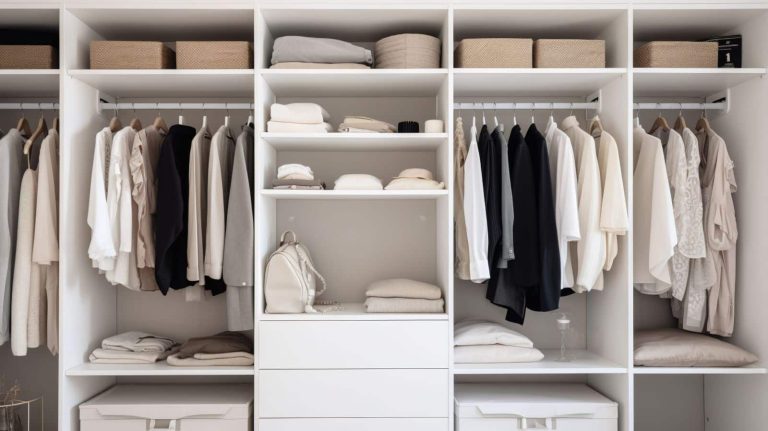
Please note: The images displayed in this blog post are for illustrative purposes only and do not reflect the REGAL Shower Screens range. Please visit the Product pages of our website for a true representation of our products.
The question we hear most often from homeowners comparing wardrobe options is simple: how much does a walk-in wardrobe cost compared with a built-in?
Built-in wardrobe cost can vary significantly by size, internal configuration, drawers, hardware and door choice. Walk-in wardrobes generally cost more because they involve more linear metres of storage and a larger fitout. This article focuses specifically on those cost differences and the factors that affect the final price.
Our team brings more than 50 years of combined industry experience to wardrobe projects, from simple bedroom built-ins to larger walk-in robes. In practice, the price difference usually comes down to the amount of storage being fitted, the internal layout and the door system rather than the label alone.
Ready to order new built-in wardrobes?
Contact REGAL Shower Screens for a free consultation today.
This article covers realistic cost ranges for both types, the main factors that push prices up or down, and how to get an accurate figure for your specific room. If your question is less about cost and more about which type suits your space, our Built-In Robe vs Walk-In Robe comparison is the better starting point.
The Short Answer: Yes, There Is a Real Cost Gap
As a general guide, built-in wardrobes cost far less than walk-in wardrobes because they use existing wall space rather than requiring a full-room fitout.
Built-in wardrobes and walk-in wardrobes sit at different points on the wardrobe pricing scale. As a general industry guide, professionally installed built-ins range from around $1,000 for a basic fitout to $7,000 or more for a larger custom configuration. A professionally fitted walk-in wardrobe may start around $3,500–$10,000, with larger fitouts commonly reaching $10,000–$20,000 and more extensive full-room fitouts reaching $20,000–$30,000 or more.
These are indicative industry averages, not REGAL’s prices. Your actual cost depends on the size of the space, storage layout, drawer count, upgraded hardware and door selection. REGAL’s wardrobe internals are currently white melamine, so board colour or timber-grain finishes are not a pricing variable in our range. Two wardrobes the same width can still cost very different amounts depending on what is inside them.
We don’t quote by generic range for that reason. Every job is measured on-site before we give a figure. The sections below break down what’s driving those numbers for each type.
What Does a Built-In Wardrobe Cost?
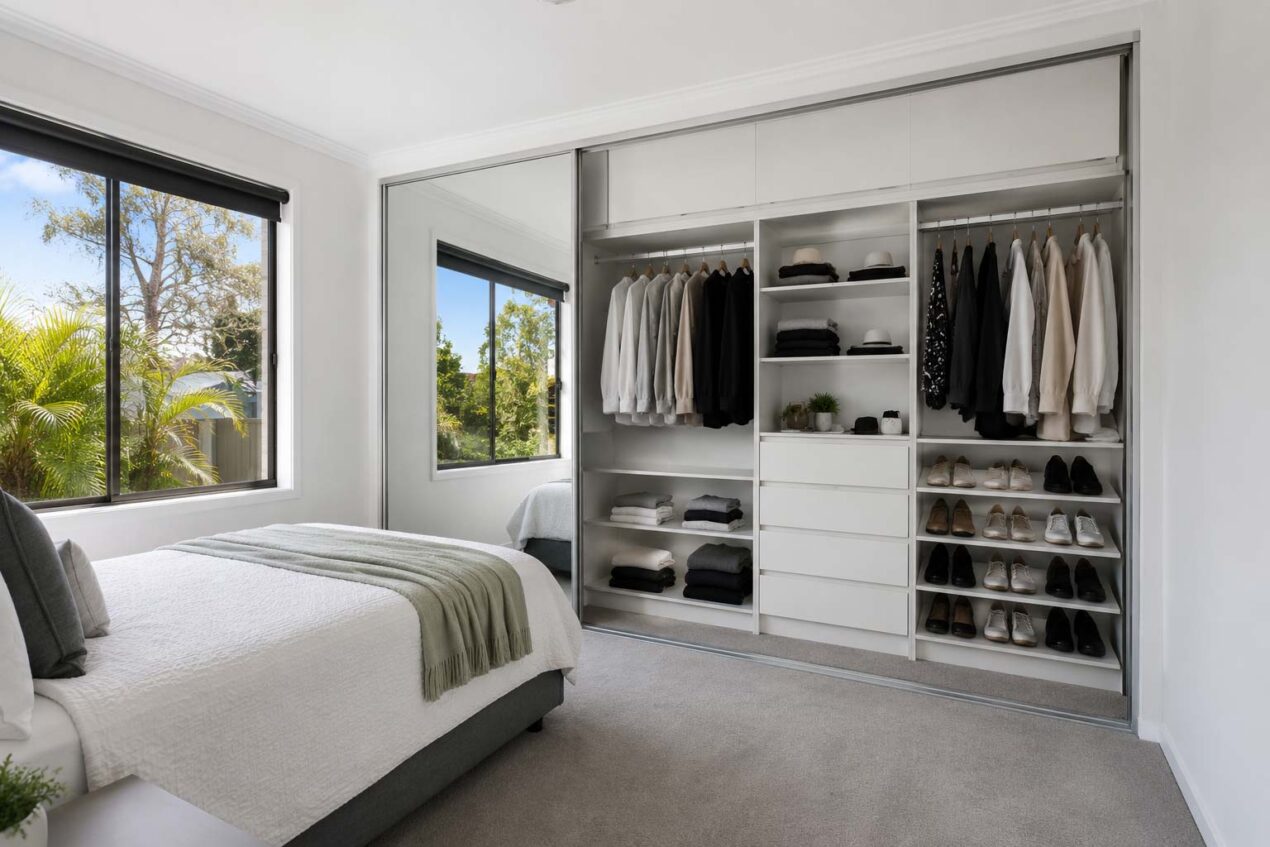
Built-in wardrobe costs in Australia vary considerably depending on size, internal configuration and door choice. As a general industry guide, a basic built-in with straightforward shelving and hanging rails typically falls between $1,000 and $3,000. Mid-range fitouts with drawers, more detailed internals and upgraded doors generally sit between $3,000 and $7,000. For larger or more complex configurations, an indicative built-in wardrobe cost per metre of around $1,000 to $3,000 or more can be useful for early budgeting. It is not a quote: the internal layout and door system can move the final figure substantially.
The variables that push built-in costs up are fairly consistent. More drawers usually increase the price because each one adds cabinetry and hardware. Soft-close runners are an upgrade. With REGAL, the internal system is white melamine, so the main pricing variables are the size of the wardrobe, wall-hung versus floor-based construction, storage configuration, drawer count, upgraded hardware and door choice.
If you are comparing built-in wardrobe cost on the Gold Coast or pricing built-in wardrobes in Brisbane, the same pricing factors apply. A simple spare-room wardrobe can sit nearer the lower end, while a larger master-bedroom fitout with more drawers, shelving and upgraded doors moves higher. The opening size and internal configuration are more useful pricing indicators than the suburb alone.
What Does a Walk-In Wardrobe Cost?
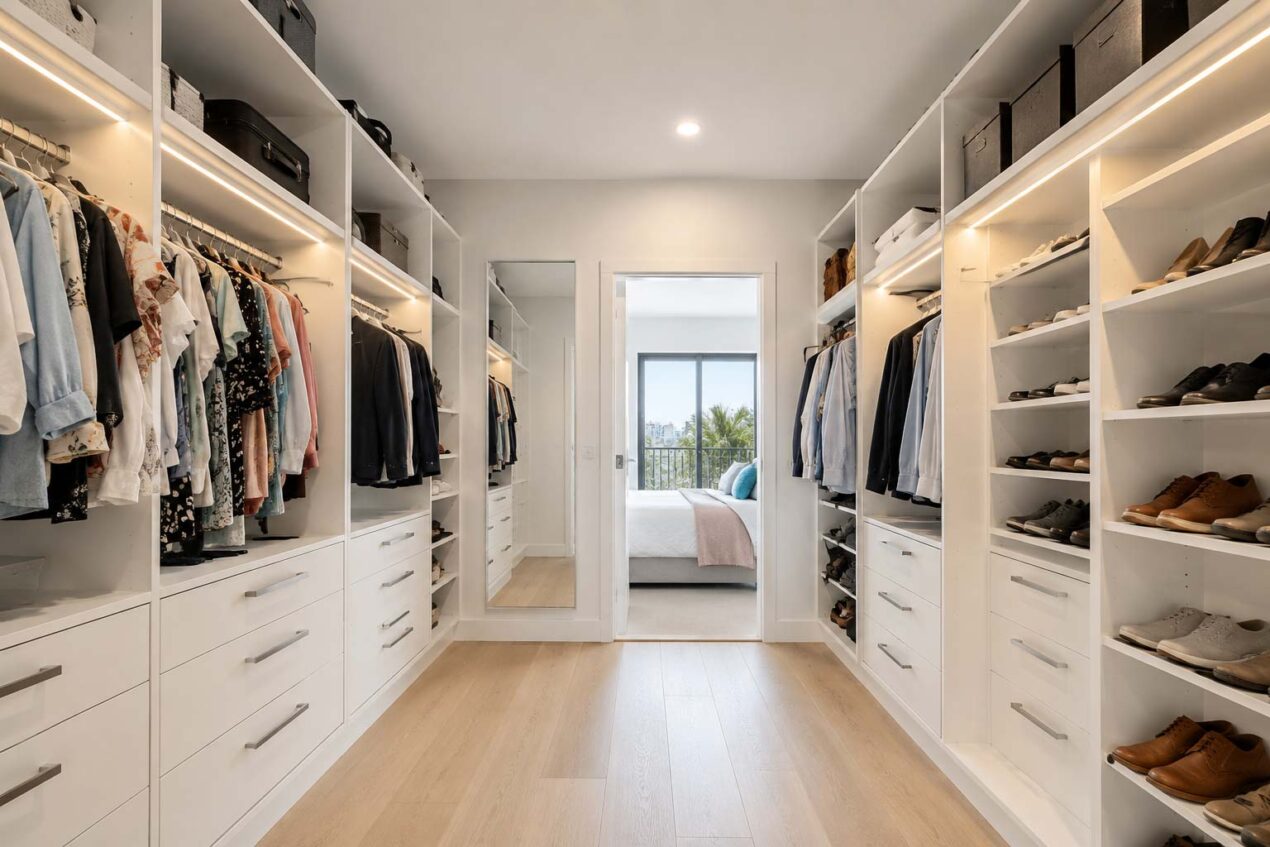
Walk-in wardrobe costs start higher than built-ins, and there is a practical reason for that. A simple professionally fitted walk-in typically starts from around $3,500–$10,000, with larger designs sitting between $10,000 and $20,000. More extensive full-room fitouts with additional cabinetry, drawers, shelving, mirrors and door systems can reach $20,000–$30,000 or more. All figures are indicative industry averages.
The key point to understand is that a walk-in wardrobe is a full-room fitout, not just a cabinetry job. You’re not fitting out a wall. You’re fitting out a dedicated dressing room. That means planning circulation space so the room actually functions, getting the lighting right, and making sure the layout feels intentional rather than just shelving pushed against every available wall.
Space is also a practical constraint. A walk-in generally needs a minimum width of around 1.5 metres and a depth of around 2 metres to work properly. If you’re weighing up whether your space qualifies, the walk-in wardrobe layouts and sizes guide covers this in detail.
What surprises clients most, in my experience, is how quickly the individual choices add up. The size of the fitout, number of drawer banks, shelving runs, door system and upgraded hardware can all change the final price once selections are confirmed.
What Drives the Price Difference?
The cost gap between a walk-in and a built-in isn’t arbitrary. It reflects the difference between fitting out a wall and fitting out a room.
A built-in uses existing wall space. The scope is relatively defined: internals, hardware and doors within one opening. A walk-in wardrobe usually involves more linear metres of storage, more hanging and shelving zones, and circulation space so the room actually functions. If a renovation is creating a new walk-in room, separate building or electrical work may also apply, but those costs sit outside the wardrobe fitout itself.
Even with the same white melamine internal system, a walk-in usually costs more because there is simply more to fit out: more shelving, more hanging space, more drawers and more linear metres of storage.
| Built-In | Walk-In | |
| Typical cost range | $1,000–$7,000+; approx. $1,000–$3,000+/metre | $3,500–$30,000+ |
| Space required | Wall space only | Dedicated room or conversion |
| Fitout complexity | One defined opening: internals, hardware and doors | Multiple storage runs, more cabinetry and circulation planning |
| Best suited to | Most bedrooms | Larger master suites with available space |
All figures are indicative industry averages only.
A well-specified built-in delivers excellent storage at a fraction of the cost. A walk-in earns its price when the space is large enough to use properly and the storage volume genuinely justifies it.
Does Your Door Choice Affect the Cost?
It does, and it’s one of the variables most homeowners don’t factor into their wardrobe budget until they’re already in the planning stage.
For built-in wardrobes, the door panel material makes a real difference to the total. Plain gyprock sits at the lower end. Vinyl panels step up from there. Mirror doors, glass doors and coloured glass panels all sit at higher price points again, and the number of panels in the opening adds to that further.
Walk-ins may also have an entry door or be left open to the bedroom or dressing area. Where a sliding wardrobe door system is part of the design, that door choice is priced separately from the internal fitout.
Panel material is genuinely worth thinking about early. Our full range of sliding wardrobe doors covers options from vinyl and MDF/Hamptons-style through to framed and frameless glass and mirror panels, each at different price points.
I’ve seen it catch clients off guard more times than I can count. They’ve budgeted carefully for the internals and then realise at measure-up that the door system they want adds to the total. I recommend settling on a door style early, before the quote stage, so the figure you get reflects the full picture.
How to Get an Accurate Price for Your Wardrobe
The reason built-in wardrobe cost varies so much from job to job is the same reason we do not publish fixed prices: two wardrobes the same width can cost very different amounts depending on the internal layout, number of drawers and shelves, hanging zones, upgraded hardware and door system. REGAL’s internals are white melamine, so a generic range can help with early budgeting but cannot price a specific space.
What does give you that number is an on-site measure. We visit the space, understand how you want to use it, take accurate measurements, and provide a fixed quote on the day. No estimates, no waiting, no back-and-forth.
REGAL supplies and installs its wardrobe systems with its own team and no subcontractors. The sales team measures the space, then qualified shelving installers complete the fitout. REGAL is a family business established in 2016, backed by more than 50 years of combined industry experience.
If you’re ready to get a real number for your wardrobe project, our custom built-in wardrobes team can measure the space and provide a fixed quote on the day.
Frequently Asked Questions
Which Wardrobe Gives You Better Value?
The cost difference between a walk-in and a built-in wardrobe is real and significant. But the right choice comes down to how much space you have and what you need to store. Both are worthwhile investments for Gold Coast and Brisbane homes when they’re designed for the space they’re going into.
If you’re still working through the design side of things, the guide on wardrobe storage solutions is a useful next step.
If you’re ready to get an accurate figure, book a free on-site measure with our team. We’ll measure the space, talk through what you need, and give you a fixed quote on the day. No waiting, no guesswork.
Request a Free Quote Today!
Experience the REGAL difference today by completing the free quote request form below. Your dream space awaits.