
Fluted Glass Shower Screens: Design, Privacy and What to Expect
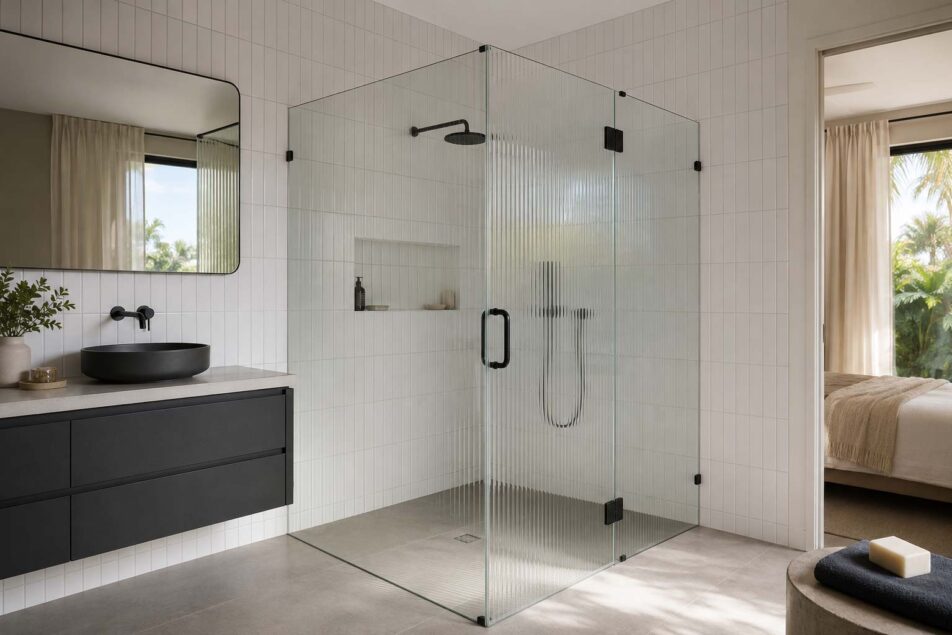
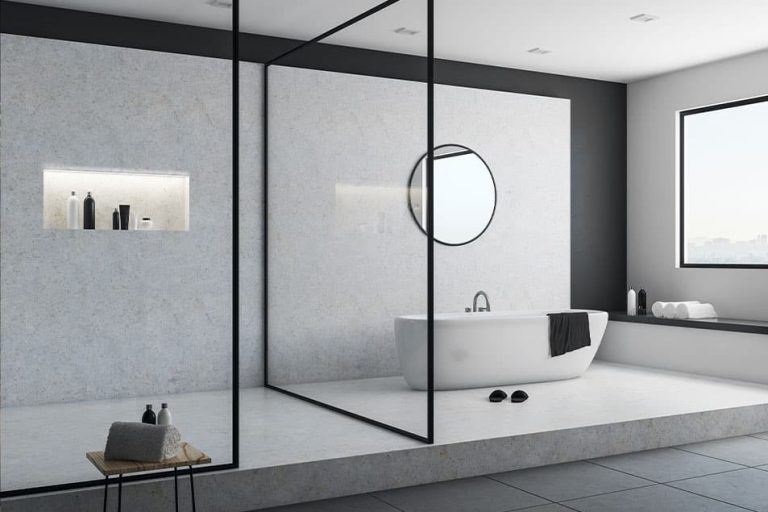
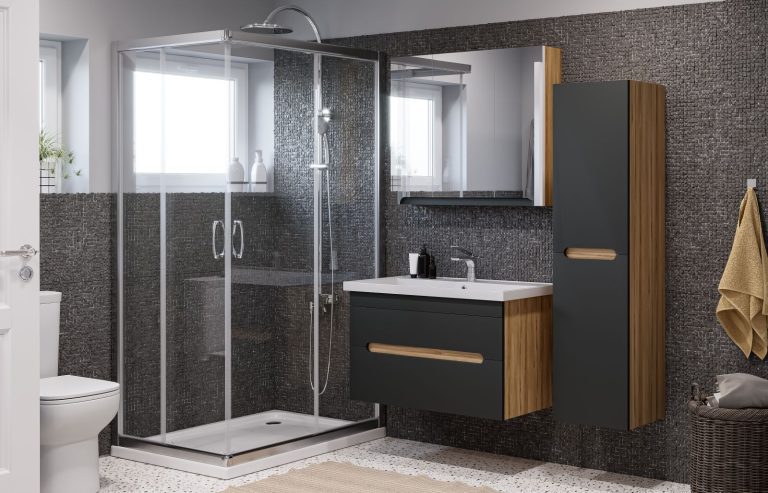
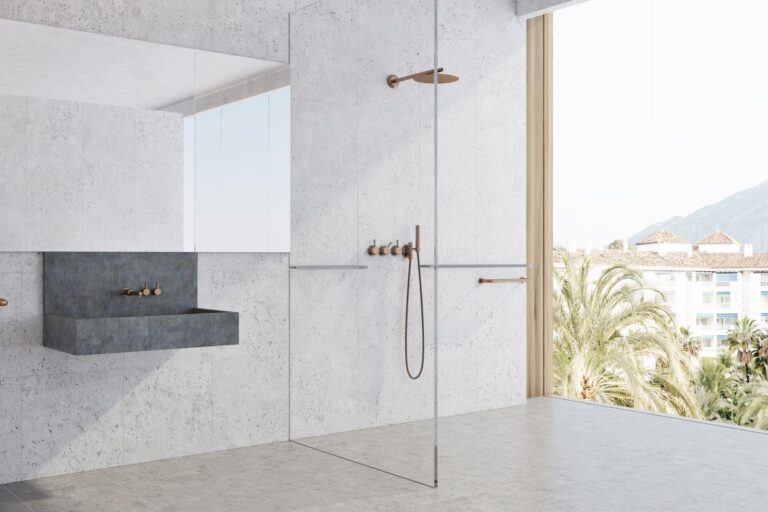
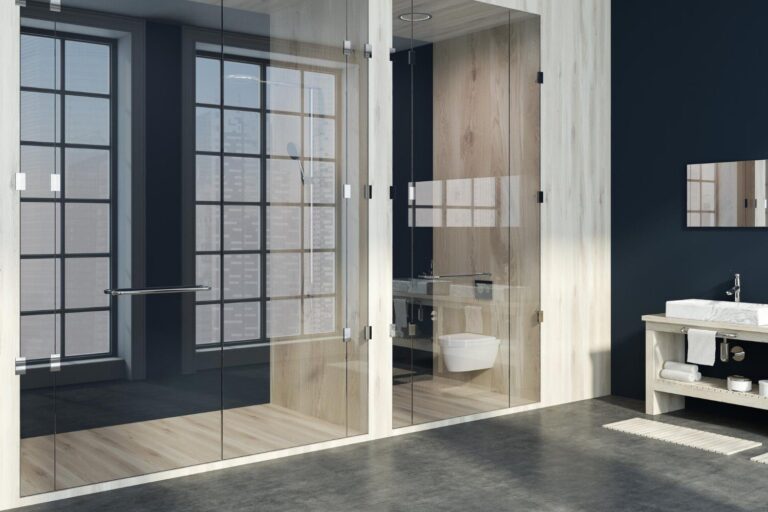
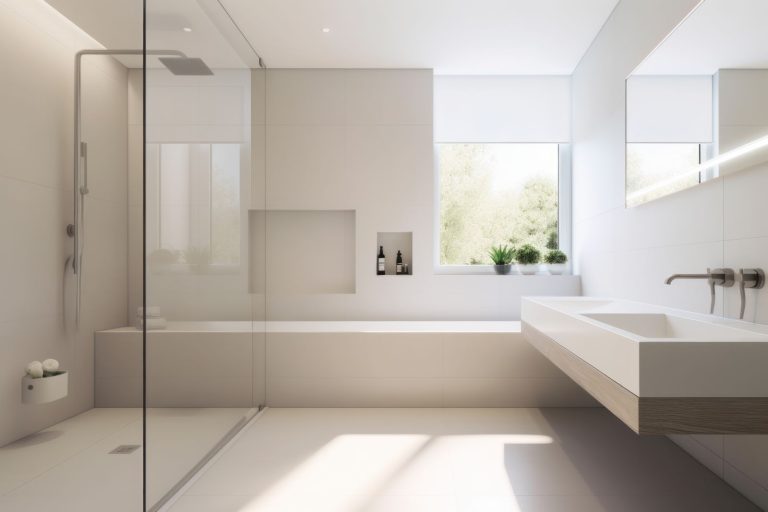
Please note: The images displayed in this blog post are for illustrative purposes only and do not reflect the REGAL Shower Screens range. Please visit the Product pages of our website for a true representation of our products.
Almost every week now, someone walks into the showroom with their phone already open. They scroll to a saved image — a bathroom with vertical grooves running through the textured glass of the shower screen, soft light catching the pattern — and ask if we can do that. The answer is yes. We’ve been installing fluted glass shower screens across the Gold Coast and Brisbane for a while now, and the look has earned its moment.
But I want to say this up front, because most articles on the subject won’t: fluted glass isn’t the right choice for every bathroom. It’s beautiful, it’s on-trend, and it has real design merit. It also comes with a few realities — around privacy, light and cleaning — that homeowners deserve to understand before they commit.
This article walks through all of it. After 50-plus years in the glass industry, I’ve seen which trends stick and which fade. Fluted is one of the ones I think is here to stay — provided it’s the right fit for your space.
What Is Fluted Glass, and Why Is It Everywhere Right Now?
Fluted glass is a textured glass with vertical grooves running down its surface — also called reeded glass or ribbed glass. The grooves form a 3D ripple on one side, while the other side stays completely smooth. That texture is part of the glass itself, not a coating, and it doesn’t affect the strength of the toughened safety glass underneath.
It’s worth distinguishing fluted from frosted, because people often confuse the two. Frosted glass has a flat, matte finish — produced by acid-etching or sandblasting — and reads as a soft, even cloud. Fluted is the opposite: glossy, transparent through the smooth grain of each groove, with the obscuring effect coming from the vertical pattern rather than a surface treatment. Stand close to fluted glass, and you can see straight through the high points; step back, and the pattern blurs everything behind it.
The reason it’s everywhere right now isn’t a mystery. Fluted has been showing up in cafés, designer kitchens and high-end joinery for a few years, and the vertical-line look has bled steadily into Australian bathroom design as one of the most-specified decorative glass options. It pairs cleanly with the matte black, brushed gold, and gunmetal hardware that’s been popular through 2024 and 2026, and it adds warmth and texture to a bathroom without committing to a tile statement.
We stock fluted shower glass as part of our standard 10mm toughened range for frameless shower screens. If you’re still weighing up the different glass finishes available for shower screens, it’s worth reading alongside this one.
Fluted, Reeded or Ribbed — What’s the Difference?
For shower screens, the three terms are largely interchangeable. In practice, “reed” tends to imply tighter, narrower grooves — what the trade often calls narrow reed — while “fluted” usually describes wider grooves, sometimes called wide reed. “Ribbed” is the loosest of the three and gets used for almost any vertical-grooved pattern, so a ribbed glass shower screen might describe anything from narrow reed to wide fluted.
My advice is not to get hung up on the label. When you’re at the measure, describe what you want visually: how wide the grooves are, how close together, how pronounced the pattern reads from across the room. That gives us much more to work with than a single word.
How Private Is Fluted Glass, Really?
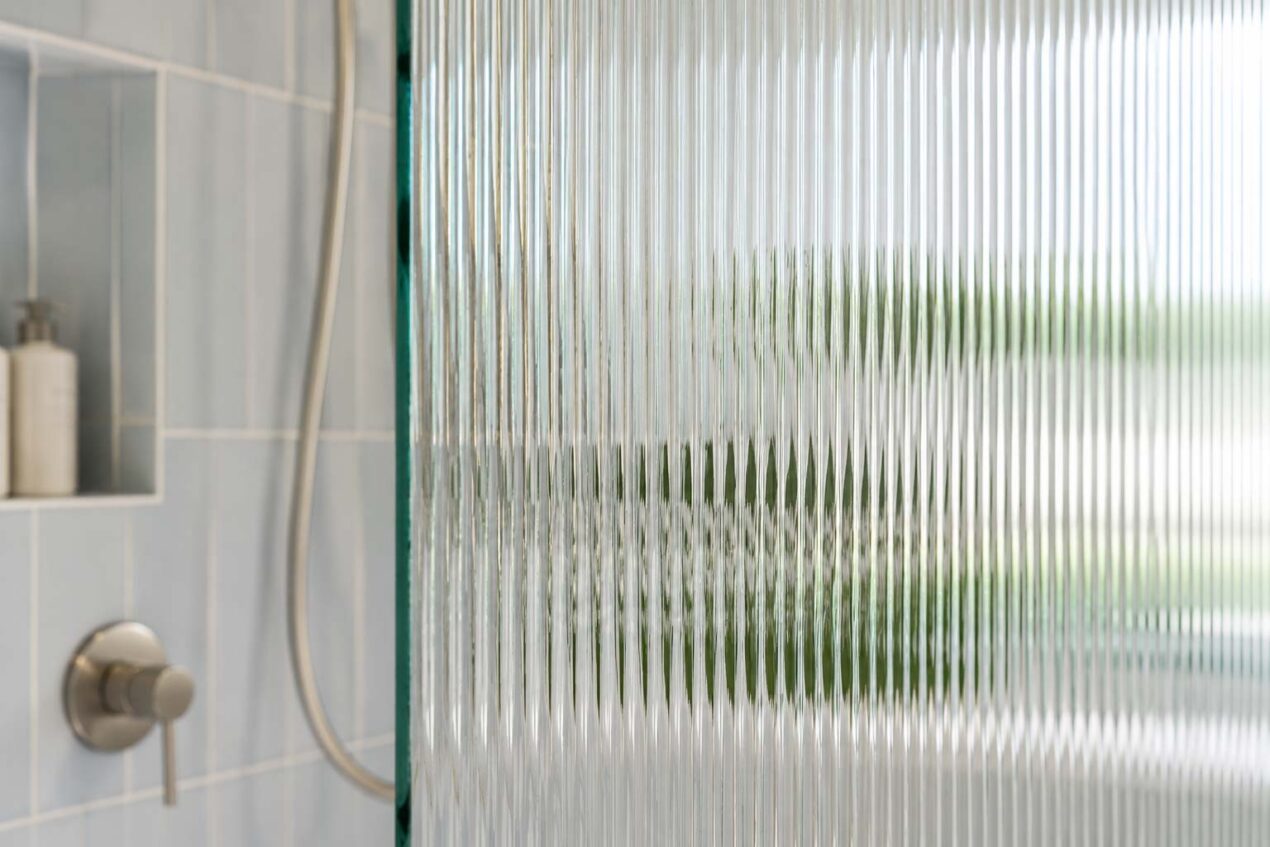
Fluted glass shower screen privacy lands in the medium range — not the full privacy you’d get from frosted. The vertical grooves distort shapes and colour, so a person on the other side reads as a soft, blurred form rather than a defined figure. But a clear outline is still visible from close distance, especially when there’s direct light coming from one side. This is the single biggest misconception I correct at the showroom.
Viewing angle changes the effect significantly. Looking straight on through the grooves, the obscuring is at its strongest — colour and movement are visible but shapes break up. Step to the side and view at an angle, and more detail comes through. It’s worth standing in front of a fluted sample and moving around it before you commit; the privacy you experience at the showroom counter is not the same as the privacy you’ll experience standing two metres away in a lit bathroom.
I had a client earlier this year — a couple renovating their main bathroom, also used by guests — who had set their heart on fluted. We held a sample up in the actual room before ordering, and within about ten seconds, they’d shifted to acid-etched frosted instead. Same family, same bathroom, very different privacy needs once they could see it for themselves.
For an ensuite, or a primary bathroom shared only with a partner, fluted’s medium privacy is usually fine. For guest bathrooms, shared family bathrooms, or households where stronger privacy genuinely matters, I’d point you toward Acid Etch/Frosted or Satinlite instead. Both are part of our standard range and give you the full obscuring effect.
If privacy is your top priority, fluted is gorgeous — but it’s a design choice first, not a privacy solution.
Light, Mood and How a Fluted Screen Changes a Bathroom
The first thing you notice in a bathroom with fluted glass is the light. Daylight diffuses through the grooves into a vertical, gently rippled pattern of soft light that reads as architectural rather than decorative. Artificial light does something similar — downlights and wall sconces break into soft vertical bands instead of bouncing off a flat clear panel. It’s a quieter kind of brightness. The room is still well-lit; the light just arrives more gently.
That light diffusion carries straight into the bathroom mood. Spaces with fluted glass feel a touch calmer and slightly more enclosed than bathrooms with clear glass. Clear glass disappears — the shower visually merges with the rest of the room. Fluted holds its presence, defining the wet zone with texture rather than a hard edge. Some homeowners want that softness. Others want the openness of clear. Neither is wrong; they’re different design intentions.
The spatial impact depends entirely on the light you start with. In a small bathroom with good natural light or strong layered artificial lighting, fluted adds warmth and texture without making the space feel closed in. In a small bathroom that’s already dim — interior ensuites with no window, or rooms with a single ceiling fixture — fluted will reduce the perceived openness and the room will feel heavier than it should.
My honest take: fluted needs light to do its best work. If your bathroom has good ambient light, fluted sings. If it doesn’t, I’d either choose clear glass for the full enclosure, or use fluted only on a smaller fixed panel where the texture becomes a feature rather than the whole room.
The Cleaning Reality — Smooth Side In, Grooved Side Out
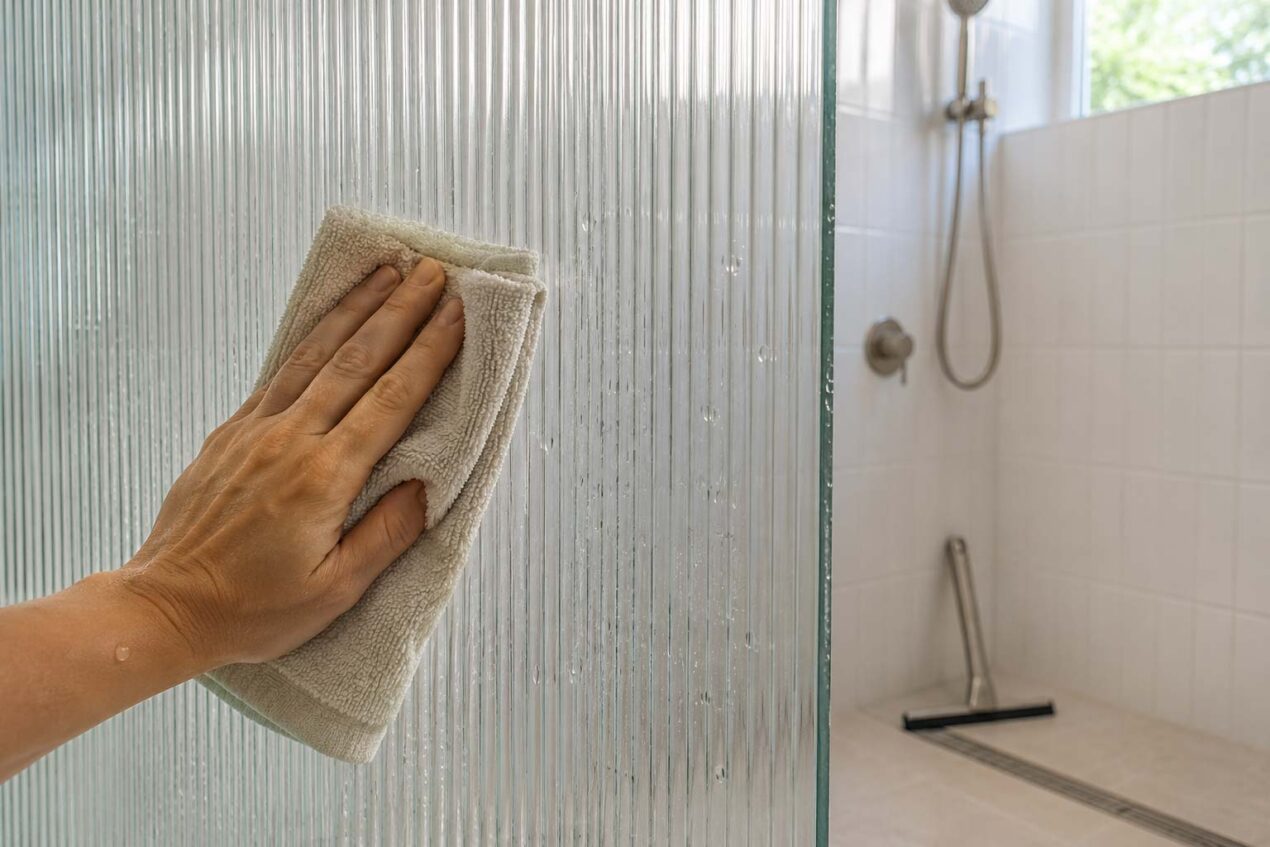
Here’s the rule that should answer most of your cleaning concerns up front: fluted glass is installed smooth side in, grooved side out. Always. The smooth face goes into the shower; the textured grooves face the room. Once you understand why, the cleaning question gets a lot simpler.
The reason is straightforward. The interior of a shower screen is where the work happens — daily soap scum, shampoo splash, body oils, the lot. A smooth interior wipes down the same way clear glass does. A textured interior would trap product in every groove and turn routine cleaning into a real chore. By keeping the smooth side in, fluted gives you almost the same daily-clean experience as clear glass.
The grooved side faces out into the bathroom, where the conditions are far gentler — steam, the occasional splash, dust. For routine cleaning, a microfibre cloth with mild detergent and warm water is all you need. Wipe vertically along the grooves, not across them. Once a quarter, run a soft bristle brush along the grooves to lift any build-up that’s collected at the base of the texture. That’s it.
A word on water. Across the Gold Coast and Brisbane, hard water is common, and water spots build up on any shower glass — fluted, clear or frosted — when water is left to dry on the surface. Keeping a squeegee in the shower and giving the inside a thirty-second pass after each use is the single best habit for keeping any screen looking new. This isn’t a fluted-specific thing; it applies to every glass type we install.
I’ll be honest: fluted isn’t quite as easy as clear glass when it’s time for a thorough deep clean. The grooves take a few extra minutes with the brush. Day-to-day, though, the smooth-in orientation means the difference is smaller than most people fear. If you want a fuller routine for any glass type, our shower screen cleaning guide covers it in detail.
When Fluted Cleaning Is Genuinely a Problem
There are a few household types where I’d steer you away from fluted on cleaning grounds alone.
- The first is a very busy household — multiple daily showers across several people, limited time for upkeep, and no real interest in the quarterly soft-bristle-brush routine. Fluted will look fine for a while, then it won’t, and you’ll resent it. Clear glass is the more honest match.
- The second is a home with severe hard water and no softening system. Hard water marks every glass type, but on fluted the buildup settles into the base of the grooves and is harder to lift once it sets.
- The third is a bathroom with poor ventilation, where steam lingers long after the shower’s finished. Persistent moisture accelerates marking on any glass and is rougher on textured surfaces than smooth ones.
In any of these scenarios, I’d recommend clear glass for low maintenance, or frosted if privacy is also a factor. Both are easier to keep looking new in difficult conditions.
Hardware Pairings — How Fluted Looks With Different Finishes
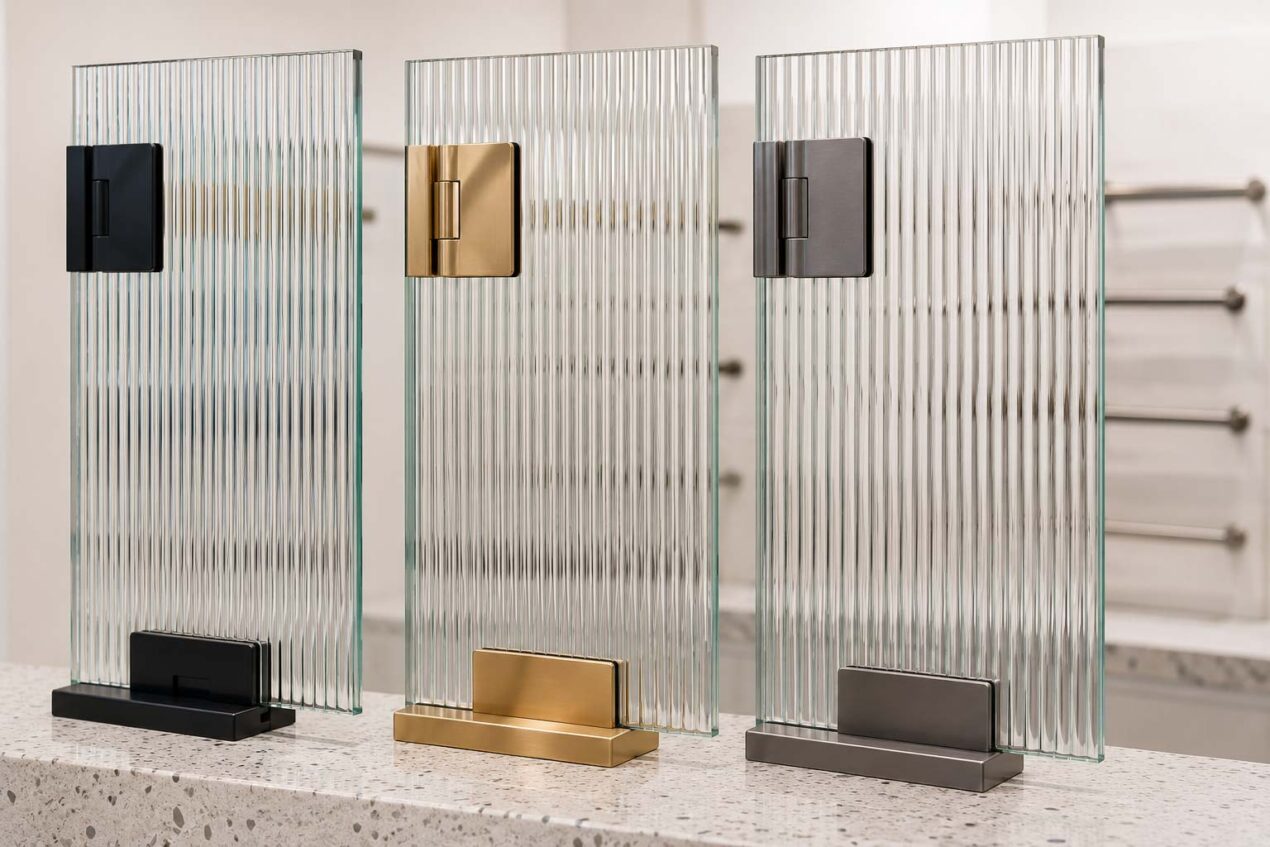
Fluted glass picks up the colour and finish of whatever sits beside it, which means the brackets you choose change the entire feel of the screen. Across our frameless shower screens, we offer twelve bracket finishes, and most of them work with fluted — but a handful do the heavy lifting. Here are the fluted shower screen design ideas — and hardware pairings — I find myself recommending most often.
- Matte black hardware is by far the most popular pairing right now, and for good reason. The black brackets define the edges of the glass crisply and the contrast against the vertical grooves reads modern-architectural. It anchors the bathroom and pairs cleanly with concrete-look tile, dark joinery, or a strong feature wall. If you’re unsure where to start, this is the safe choice.
- Brushed gold + fluted is the warmer cousin. Soft, premium, slightly hospitality-leaning. It sings in bathrooms with stone benches, travertine or warm-toned tile palettes, and natural timber vanities. It’s the pairing for homeowners chasing a calm, slightly luxe finish rather than a sharp modern one.
- Gunmetal + fluted is what I suggest when matte black feels too strong. Gunmetal is subtler — a deep, warm grey rather than a hard black — and it suits both modern and transitional bathrooms without committing to either. Versatile and forgiving.
- Polished chrome and pearl chrome + fluted is the classic, timeless hardware finish. It reads hotel-luxe rather than trend-led, and it’s the right choice if you’re worried about the look dating. Less editorial, more enduring.
- White + fluted is rare but striking in the right setting — light, beachy bathrooms with white tile, pale timber and lots of natural light. It’s a soft, summery pairing.
If you genuinely can’t decide, choose matte black. It works in more bathrooms than any other finish and ages well as trends shift around it.
Configurations — Where Fluted Glass Works in a Shower
We offer the fluted shower screen in our 10mm toughened glass range, which means it’s specified into our frameless screens and our fixed glass shower panels. There are three configurations I see fluted used in most often.
The first is the walk-in / fixed panel — a single fluted panel, no door, usually paired with a partial wall return. This is the most popular fluted format we install, and it’s the strongest showcase for the texture. The single uninterrupted panel lets the vertical grooves do their work without competing edges, and the format suits the modern walk-in shower layouts that have become standard in new builds and renovations. If you’re considering this format specifically, our fixed glass shower panels page covers it in more detail.
The second is the frameless hinged door — both the door and the return panel in fluted glass. It’s striking and undeniably premium, but it uses a much larger area of fluted, which can feel busy in a small bathroom. In a generous master ensuite, it works beautifully. In a tight ensuite, I usually steer people away.
The third is what I’d call a mixed configuration — fluted on the fixed return panel, clear on the hinged door. This is a designer tactic more than a standard option, but it’s increasingly popular. You get the privacy and texture of fluted where it matters most (the wall facing the rest of the bathroom), while the door stays visually light and the room feels more open. It’s a smart compromise.
One thing to know: our semi-frameless and semi-frameless sliding screens use the 6mm toughened range, which doesn’t include fluted. Those configurations come in Clear, Opti, Satinlite, Frosted or Tinted only. If fluted is the look you’re after, you’re looking at our frameless 10mm format — the same construction we use across most of the shower screens we make.
Fluted vs Other Privacy Glass Options
Fluted is one of several glass options we stock, and it isn’t always the right call. The choice usually comes down to two things: how much privacy you actually need, and how much cleaning effort you’re willing to manage day-to-day. Here’s how the main options stack up against each other.
| Glass Type | Privacy Level | Light Transmission | Cleaning Ease | Style Feel |
| Clear | None | Maximum | Easiest | Open, minimal |
| Fluted / Reed | Medium | High (diffused) | Moderate | Textural, architectural |
| Frosted (acid-etched) | High | Medium (soft, even) | Moderate | Soft, classic |
| Satinlite | Medium-high | Medium | Moderate | Soft, contemporary |
A simple way to read the table: if you want strong natural light and a design feature, fluted is the pick. If full privacy matters more than design, go with frosted (acid-etched) — it gives you complete obscuring with a soft, classic finish. If your decision has narrowed to frosted vs clear shower glass, it mainly comes down to privacy, openness, available light and how visible you want everyday marks to be. And if you want softer privacy without a visible pattern, Satinlite sits between fluted and frosted: more obscuring than fluted, less stark than acid etch.
I’d add one practical note. The fluted vs frosted glass shower screen decision is the one I see homeowners agonise over most, and the honest answer is that they’re not really competing for the same job. Fluted is a design statement that happens to provide medium privacy. Frosted is a privacy solution that happens to look soft. Decide which job matters most for your bathroom, then choose accordingly.
If you’d like a deeper read on the full range of shower screen glass options we offer, that piece walks through every type in detail.
What to Expect From a Custom Fluted Glass Shower Screen With REGAL
If you’ve decided fluted is the right call for your bathroom, here’s how the process actually works on our end. We start with a free on-site measure — one of our team comes to your home, looks at the actual space, and works with you on configuration, hardware finish and glass type. From there, you get a same-day fixed quote. No back-and-forth, no surprises a week later, no quote that creeps once the work begins.
Once the quote’s approved, your screen is custom-made to your exact bathroom. The glass is cut and toughened locally — we don’t import pre-cut panels — then assembled at our factory in Nerang. Every piece meets AS/NZS 2208 and AS 1288, the Australian Standards for safety glazing materials and glass installation in buildings. The glass we use for fluted is the same 10mm toughened safety glass we specify across the frameless range; the texture is part of the glass, not a coating, and it doesn’t compromise the strength.
Installation is done by our own team. We don’t subcontract. Our custom shower screens on the Gold Coast come with a two-year warranty on the screens themselves and a one-year warranty on moving parts.
This is the part where the difference between a pre-made online panel and a custom screen really shows. Bathrooms are rarely perfectly square, and a panel that’s even a few millimetres off in the wrong place will leak or sit awkwardly. The measure-and-install model exists for exactly this reason.
If you’re weighing fluted glass for your bathroom, we offer free on-site measures and same-day fixed quotes — no obligation.
Frequently Asked Questions
How do I clean fluted glass shower screens?
Clean fluted glass shower screens with a microfibre cloth, mild detergent and warm water for routine maintenance, and a soft-bristle brush run vertically along the grooves once a quarter for a deeper clean. Because fluted is installed smooth side in, the day-to-day cleaning is roughly the same as clear glass — the textured surface faces the room, not the shower. A squeegee on the inside after each use keeps water spots at bay.
How private is a fluted glass shower screen?
Fluted glass provides medium privacy — it distorts shapes and colour but doesn’t fully obscure outlines, especially up close or under strong direct lighting. For ensuites and primary bathrooms shared with a partner, this level of privacy is usually fine. For shared family bathrooms, guest bathrooms, or households where greater privacy matters, frosted acid-etched glass is the better choice and provides complete obscuring.
What’s the difference between fluted, reeded and ribbed glass?
The three terms refer to the same family of vertically-grooved decorative glass and are largely interchangeable in shower screens. “Reed” tends to imply tighter, narrower grooves; “fluted” usually implies wider, more pronounced grooves; “ribbed” is a less specific catch-all that gets used for almost any vertical-grooved pattern. When you’re at the measure, it’s more useful to describe the groove width and spacing you want than to focus on the label.
Is fluted glass safe for shower screens?
Yes — fluted glass used in shower screens is the same toughened safety glass as clear glass, with the texture forming part of the surface rather than a coating. Our fluted/reed shower glass is 10mm toughened and complies with Australian Standards AS/NZS 2208 and AS 1288, which cover safety glazing materials and glass installation in buildings. The texture doesn’t weaken the glass in any way.
Will fluted glass shower screens date?
Fluted glass is currently a strong design trend, but the reeded glass shower screen has architectural roots that run deep — vertical reeded glass has been used in interiors for more than a century. That history is the main reason I don’t think it’ll date as quickly as more decorative finishes. Pairing fluted with neutral hardware finishes like matte black, brushed nickel or gunmetal is the safest hedge against the look feeling tied to a single moment.
Is Fluted Glass the Right Choice for Your Bathroom?
Here’s the short version. Fluted glass is a strong choice if your bathroom has good natural or layered artificial light, an open layout or a generous ensuite, and a household comfortable with medium privacy and a slightly more involved deep-clean every few months. In those bathrooms, it’s beautiful, current, and unlikely to date.
It’s the wrong choice if your bathroom is small and dim, if your household is too busy to keep up with periodic deep cleaning, or if stronger privacy genuinely matters. In those cases, clear or frosted glass will serve you better — and I’d tell you so at the measure.
If you’d like to see fluted glass options for your bathroom, you can book a free quote, and we’ll come out for an on-site measure and a same-day fixed price. We service the Gold Coast and Brisbane. No obligation.
Request a Free Quote Today!
Experience the REGAL difference today by completing the free quote request form below. Your dream space awaits.